Face
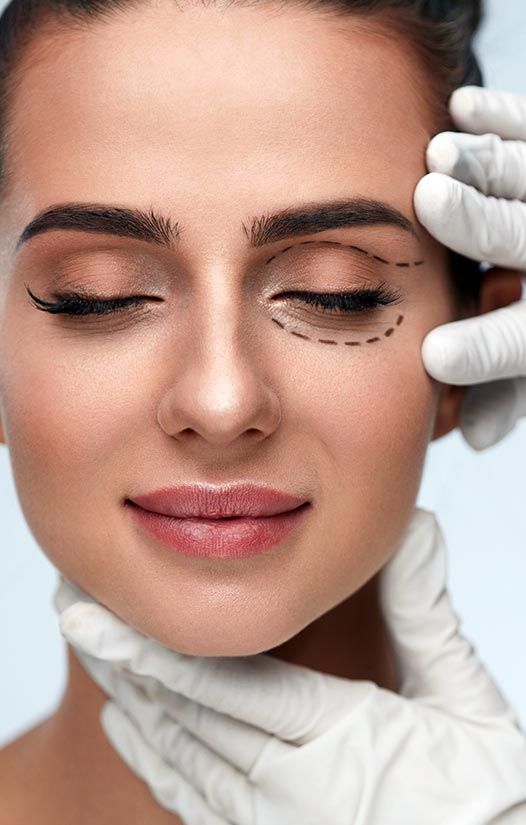
Blepharoplasty, or eyelid surgery, is designed to rejuvenate the upper and/or lower eyelids by addressing excess skin, prominent fat, and age-related changes around the eyes.
Whether your concern is heavy upper eyelids, under-eye bags, or a tired appearance that does not reflect how you feel, treatment can be tailored to restore a fresher, more rested appearance while preserving your natural features.
Upper & Lower Eyelid Surgery | Personalised Surgical Planning
The eyes are often one of the first areas to show the effects of ageing.
Over time, the skin around the eyes can become thinner and looser, the upper eyelid may develop excess skin, and fat compartments around the lower eyelid can become more prominent. These changes can make the eyes appear tired, heavy or aged — even when you feel completely well-rested.
Blepharoplasty is not about creating a different-looking eye. It is about carefully addressing the changes that are making the eyes look tired while maintaining your natural anatomy, expression and character.
Depending on your anatomy and concerns, surgery may involve the upper eyelids, lower eyelids, or both.
Upper blepharoplasty addresses excess skin and, when appropriate, underlying fat or muscle contributing to heaviness of the upper eyelids.
For some patients, the concern is primarily cosmetic. For others, excess upper-eyelid skin can extend toward the visual field and contribute to functional difficulty.
The aim is to create a cleaner, more refreshed upper eyelid contour while preserving an appropriate amount of skin and maintaining the natural shape of the eye.
The key is restraint. Removing too much skin can create an unnatural or hollow appearance, which is why eyelid surgery requires careful assessment and planning.
Lower blepharoplasty is often more nuanced than simply removing excess skin.
Under-eye bags may occur because of prominent orbital fat, changes in the tissues supporting the lower eyelid, skin laxity, or a combination of these factors. Treatment is therefore individualised according to the anatomy of each patient.
Where appropriate, lower blepharoplasty may involve repositioning orbital fat rather than simply removing it, helping to soften the transition between the lower eyelid and cheek.
Depending on your anatomy, surgery may also address excess lower-eyelid skin and provide additional support to the lower eyelid when required.
The goal is not a completely smooth, tensioned lower eyelid. A natural result preserves appropriate contours and avoids the overly pulled or hollow appearance associated with excessive correction.
When both the upper and lower eyelids show age-related changes, combining upper and lower blepharoplasty can provide a more balanced rejuvenation of the eye area.
The procedures can be performed together when appropriate, allowing the upper and lower eyelids to be considered as part of the same aesthetic unit.
However, not everyone needs both procedures. Your surgery should be based on your individual anatomy and concerns rather than a standardised approach.
You may be a candidate for eyelid surgery if you are concerned about:
During your consultation, your eyelid anatomy, skin quality, fat distribution, brow position and overall facial proportions will be assessed.
This is particularly important because not every concern around the eyes is caused by excess eyelid skin or fat. Brow descent, tear-trough hollowing, midface changes and other factors can contribute to an aged appearance and may influence the recommended treatment.
During your consultation, we will discuss what bothers you about your eyes, examine the upper and lower eyelids in detail, and assess the surrounding structures that contribute to their appearance.
Your surgical plan may include:
01 — Assessment
Detailed evaluation of your eyelid skin, fat compartments, eyelid position, brow and facial proportions.
02 — Personalised planning
Determining whether you would benefit from upper blepharoplasty, lower blepharoplasty, both, or an alternative approach.
03 — Surgical technique
Choosing the appropriate incision and technique based on your anatomy and desired outcome.
04 — Natural rejuvenation
The goal is to make you look fresher and more rested — not as though you have had surgery.
Blepharoplasty is performed under anaesthesia appropriate to the extent of surgery and individual patient factors.
For upper blepharoplasty, the incision is typically placed within the natural crease of the upper eyelid, allowing the resulting scar to become discreet as it heals.
For lower blepharoplasty, the approach depends on the anatomy. Fat may be accessed through an incision inside the lower eyelid (transconjunctival approach) or through a skin incision just below the eyelashes (transcutaneous approach) when additional skin treatment is required.
The procedure is carefully tailored rather than following a one-size-fits-all technique.
Most patients experience some combination of swelling, bruising and tightness around the eyes during the early recovery period.
These changes are usually most noticeable during the first several days and gradually settle.
You will receive specific instructions regarding wound care, activity, sleeping position, makeup and follow-up.
While the initial recovery is relatively short, the final result continues to refine as swelling resolves and the tissues settle.
The goal is a subtle but meaningful rejuvenation.
Your eyes should still look like your eyes — simply fresher, more rested and less weighed down by the changes that were bothering you.
The longevity of the result varies between individuals and depends on factors including ageing, skin quality, genetics and lifestyle. Blepharoplasty does not stop the natural ageing process, but it can provide a long-lasting improvement in the appearance of the eyelids.
The aim of a well-planned blepharoplasty is generally to preserve your natural eye shape and expression. Surgical planning is tailored to your anatomy to avoid an operated or overly altered appearance.
Upper-eyelid incisions are placed within the natural eyelid crease. Lower-eyelid scars, when a skin incision is required, are placed just beneath the eyelashes and generally become less noticeable as they mature.
Not necessarily. Lower-eyelid ageing can involve fat prominence, hollowness, skin laxity and changes in support. In suitable patients, fat repositioning may be preferable to simply removing fat.
Yes. Upper and lower blepharoplasty can be performed during the same operation when both areas would benefit from surgery and the patient's overall health and anatomy are suitable.
Not always. Dark circles can have several causes, including pigmentation, vascular visibility, shadowing and volume loss. Blepharoplasty can improve the structural component of under-eye darkness in selected patients, but it is not a universal treatment for pigmentation.
The duration varies depending on whether upper eyelids, lower eyelids, or both are being treated and on the techniques required.
This depends on the extent of surgery and the nature of your work. Bruising and swelling are usually the main considerations during the early recovery period.
Eyelid surgery is a procedure where precision matters more than volume of change.
The aim is not to make the eyes look dramatically different. It is to remove or reposition what is contributing to an unnecessarily tired appearance while preserving the anatomy that makes your face yours.
Book a consultation with Dr. Sneha Gulati to discuss your concerns and create a personalised treatment plan.
View our gallery of patient transformations for this procedure.
View Before & AftersProcedure Time
1.5 - 2 Hours
Anesthesia
General / Local / Sedation
Downtime
2 weeks
Results
at 2 weeks and improving