Liposuction and body contouring
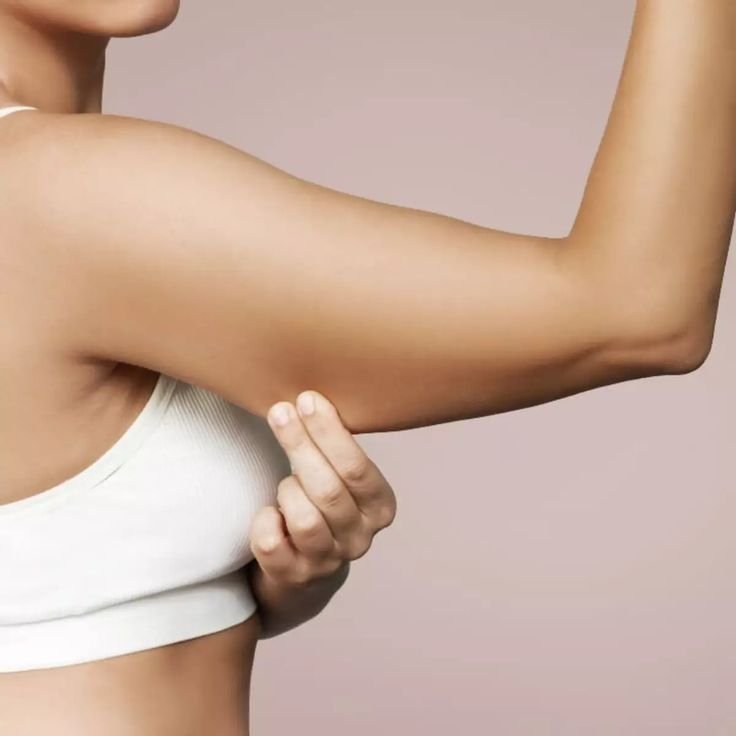
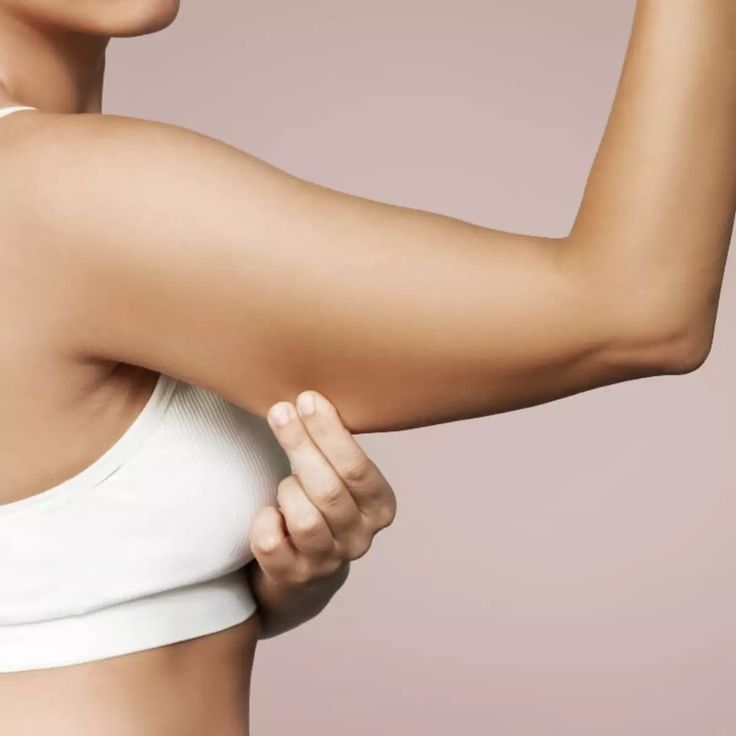
Refined upper-arm contours through precision skin and fat
reduction.
An arm lift, or brachioplasty, is designed to address
excess skin and fat of the upper arms, particularly when the skin has lost its
elasticity and no longer contracts adequately.
Our approach combines liposuction with precise skin
excision. Liposuction is performed not only to reduce excess fat and
improve the overall arm contour, but also to debulk the tissue beneath the
skin that will be removed.
This allows the excess skin to be removed more precisely
while helping preserve the underlying lymphatic and vascular structures.
The goal is a firmer, smoother and more defined upper arm,
with the least disruption to the tissues that support healthy healing.
Why Liposuction Is an Important Part of the Procedure
It is not simply about removing fat.
In an arm lift, liposuction serves two important purposes.
01 — Contouring
Excess fatty tissue is reduced to create a more refined
upper-arm contour and improve the transition between the arm and surrounding
tissues.
02 — Tissue Debulking
The tissue beneath the skin that is planned for excision is
carefully debulked with liposuction before the skin is removed.
This facilitates a more controlled skin excision and
stripping technique, allowing the surgeon to remove the redundant skin
while minimising unnecessary disruption of the deeper tissues.
This approach is particularly important because the upper
arm contains an intricate network of lymphatic vessels and other important
structures.
Our aim is therefore not simply to remove as much tissue as
possible, but to achieve the desired contour while preserving the anatomy
that supports lymphatic drainage and tissue healing.
Who May Benefit From an Arm Lift?
An arm lift may be suitable for patients with:
An important part of the assessment is determining how
much of the arm's fullness comes from fat and how much comes from excess skin.
Your Personalised Arm Lift Plan
During your consultation, we assess:
Skin
The amount, quality and distribution of excess skin.
Fat
The thickness and distribution of subcutaneous fat
throughout the arm.
Skin elasticity
How well the remaining skin is likely to contract after
surgery.
Arm proportions
The relationship between your upper arm, shoulder, forearm
and overall body shape.
Lymphatic anatomy
The surgical approach is planned with careful attention to
preserving important underlying structures wherever possible.
This allows the procedure to be tailored to your anatomy
rather than following a fixed incision or tissue-removal pattern.
The Procedure
Liposuction → Debulking → Skin Excision → Contouring
The procedure begins with liposuction of the upper arm.
This reduces excess fatty tissue and, importantly, debulks
the skin and subcutaneous tissue that is going to be removed.
Once the tissue has been appropriately reduced, the
redundant skin can be excised using a controlled stripping technique.
By separating the skin and subcutaneous tissue in a more
targeted manner rather than aggressively dissecting through the deeper tissues,
the aim is to minimise disruption of the lymphatic network.
The remaining skin is then redraped and carefully closed to
create the desired contour.
The exact incision and amount of skin removed depend on your
individual anatomy and the degree of laxity.
Why Lymphatic Preservation Matters
The upper arm has an important lymphatic drainage network.
Extensive disruption of these structures can contribute to
prolonged swelling and other postoperative issues.
For this reason, our approach focuses on controlled
tissue removal rather than aggressive dissection.
By incorporating liposuction to debulk the tissue before
skin excision and using a precise stripping technique, we aim to achieve
effective skin removal while preserving as much of the underlying lymphatic
anatomy as possible.
The goal is not simply a tighter arm — it is a
well-contoured arm with thoughtful respect for the tissues beneath the skin.
Arm Lift Scars
An arm lift necessarily involves a scar because excess skin
has to be removed.
The incision is generally positioned along the inner
aspect of the upper arm, where it is less visible from many external
viewpoints.
The length of the scar depends on the extent and
distribution of excess skin.
A shorter incision may be appropriate for selected patients
with limited laxity, while more extensive skin excess may require a longer
incision extending toward the armpit.
Scar maturation continues for several months after surgery,
and individual scar quality varies according to healing and genetic factors.
Recovery
Swelling, bruising, tightness and temporary discomfort are
expected following surgery.
Because the procedure involves both liposuction and skin
excision, the arms may feel particularly tight during the initial recovery
period.
A compression garment may be recommended to support the
treated tissues and help manage postoperative swelling.
Your activity will be increased progressively, with
restrictions on heavy lifting and strenuous upper-body exercise during the
early healing period.
As swelling settles and the tissues soften, the final
contour becomes increasingly apparent.
Results
An arm lift can create a firmer, smoother and more
defined upper-arm contour, particularly when loose skin has been the
primary concern.
Because both fat and excess skin are addressed, the result
can be more comprehensive than treating either component alone.
The removed skin and fat do not return. However, significant
weight fluctuations and the natural ageing process can affect the remaining
tissues over time.
Maintaining a stable weight helps preserve the result.
Frequently Asked Questions
Why is liposuction performed during my arm lift?
Liposuction is an integral part of our arm-lift technique.
It reduces excess fat and, importantly, debulks the tissue before the
redundant skin is removed, allowing for more precise skin excision and
contouring.
Is this the same as having liposuction alone?
No. Liposuction can reduce fat but cannot remove significant
excess skin. An arm lift combines fat reduction with surgical removal of
redundant skin.
Does liposuction make the scar smaller?
Not necessarily. The length of the scar depends primarily on
the amount and distribution of excess skin. Liposuction helps reduce the
thickness of the tissue being removed and improves contouring, rather than
simply shortening the incision.
Why is lymphatic preservation important?
The upper arm contains important lymphatic drainage
pathways. Our surgical approach aims to minimise unnecessary disruption of
these structures, which may help support a smoother recovery and reduce
postoperative swelling.
Will I have a scar?
Yes. Skin removal requires an incision. The scar is
generally placed along the inner upper arm and its length depends on the amount
of excess skin.
Can an arm lift be performed after major weight loss?
Yes. Arm lift surgery is commonly performed after
significant weight loss when the skin has not contracted adequately.
Will my arms look completely tight?
The aim is firmness with a natural contour, not an
artificially stretched appearance. The amount of skin removed is carefully
balanced against the quality and mobility of the remaining tissue.
Refined. Contoured. Proportionate.
An arm lift is not simply about cutting away loose skin.
It is a three-dimensional contouring procedure in
which fat is reduced, tissue is debulked, excess skin is precisely removed, and
the remaining tissues are carefully redraped.
By combining liposuction with a controlled skin-excision
technique, the aim is to achieve defined arms while respecting the
underlying anatomy and preserving lymphatic structures wherever possible.
Book a consultation with Dr. Sneha Gulati to
determine the approach best suited to your anatomy and goals.
View our gallery of patient transformations for this procedure.
View Before & AftersProcedure Time
3 hours
Anesthesia
General
Downtime
2 weeks
Results
Immediate & Improving